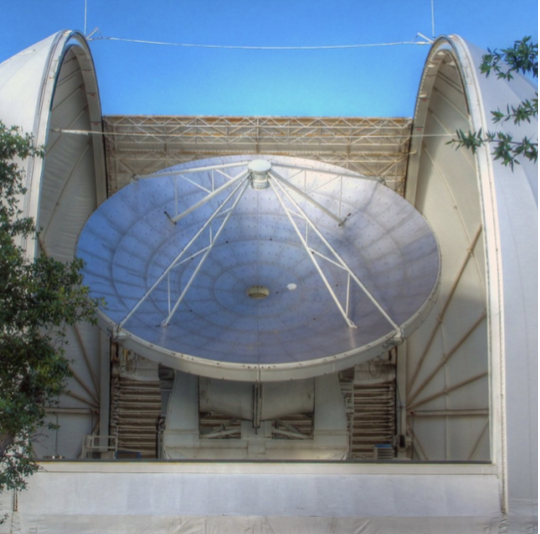
The purpose of this webpage is to show a static EHT data overview for all EHT campaings. I will show basic data status without giving too many details. Distinquishment will be made between "uniform" data reduction within C&E and "non-uniform" reduction in PI-led projects.
Click on each campaign or PI list bubble to view detailed information.
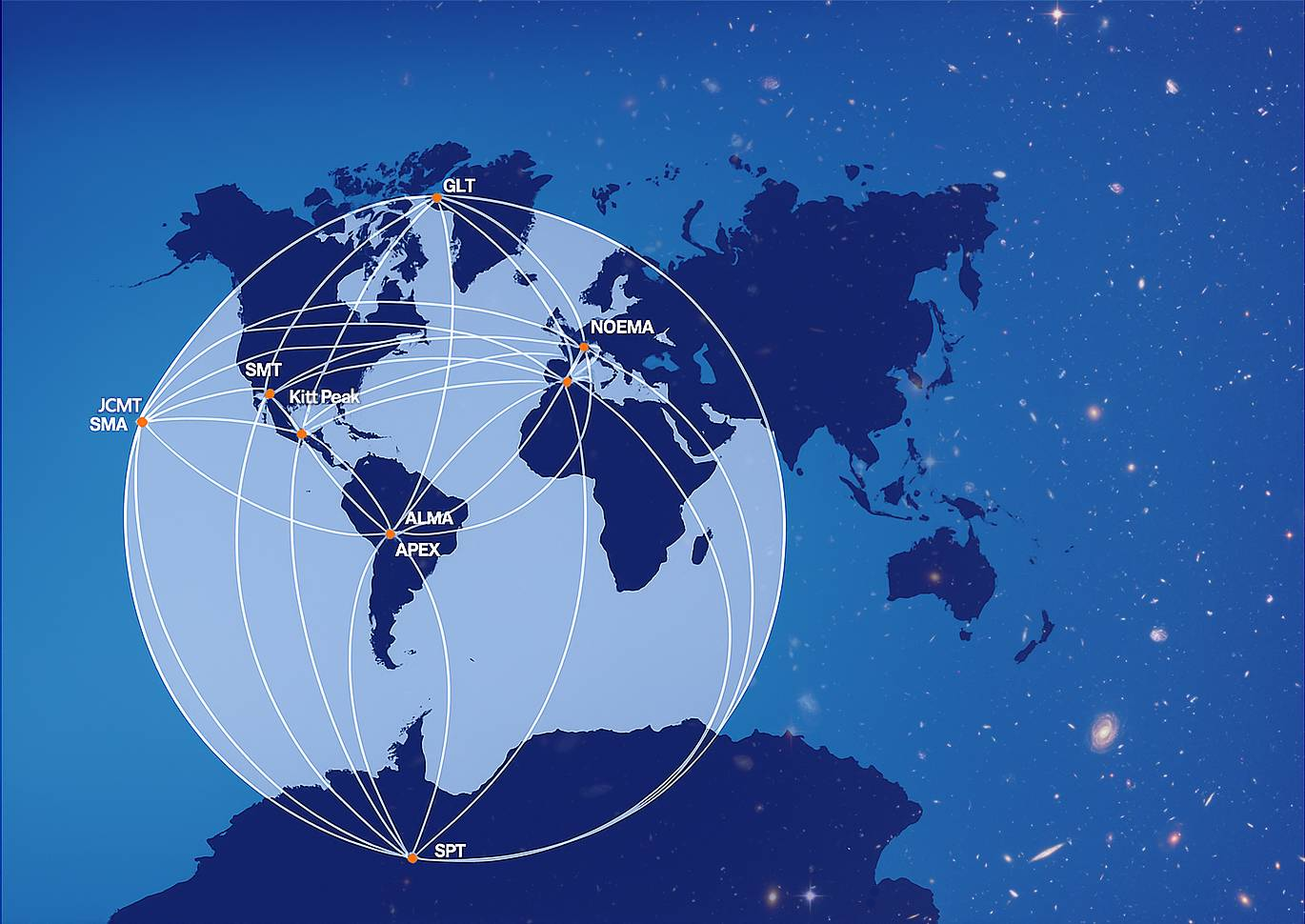
This page is designed to help you explore the calibration tools used to process data from the Event Horizon Telescope (EHT), which are typically reduced using either the EHT-HOPS pipeline (Blackburn et al. 2019) or the CASA/rPICARD pipeline (Janssen et al. 2019).
These tutorials aim to support new users — especially those new to submillimeter VLBI — by walking you step-by-step through the EHT data reduction process in an pedagogical and user-friendly way. Whether you're using HOPS or CASA/rPICARD, we hope these guides help you begin your EHT journey with ease and confidence. We assume users have some basic background in radio interferometry and are familiar with general calibration procedures used in instruments like the Very Large Array (VLA) or the Atacama Large Millimeter/submillimeter Array (ALMA).
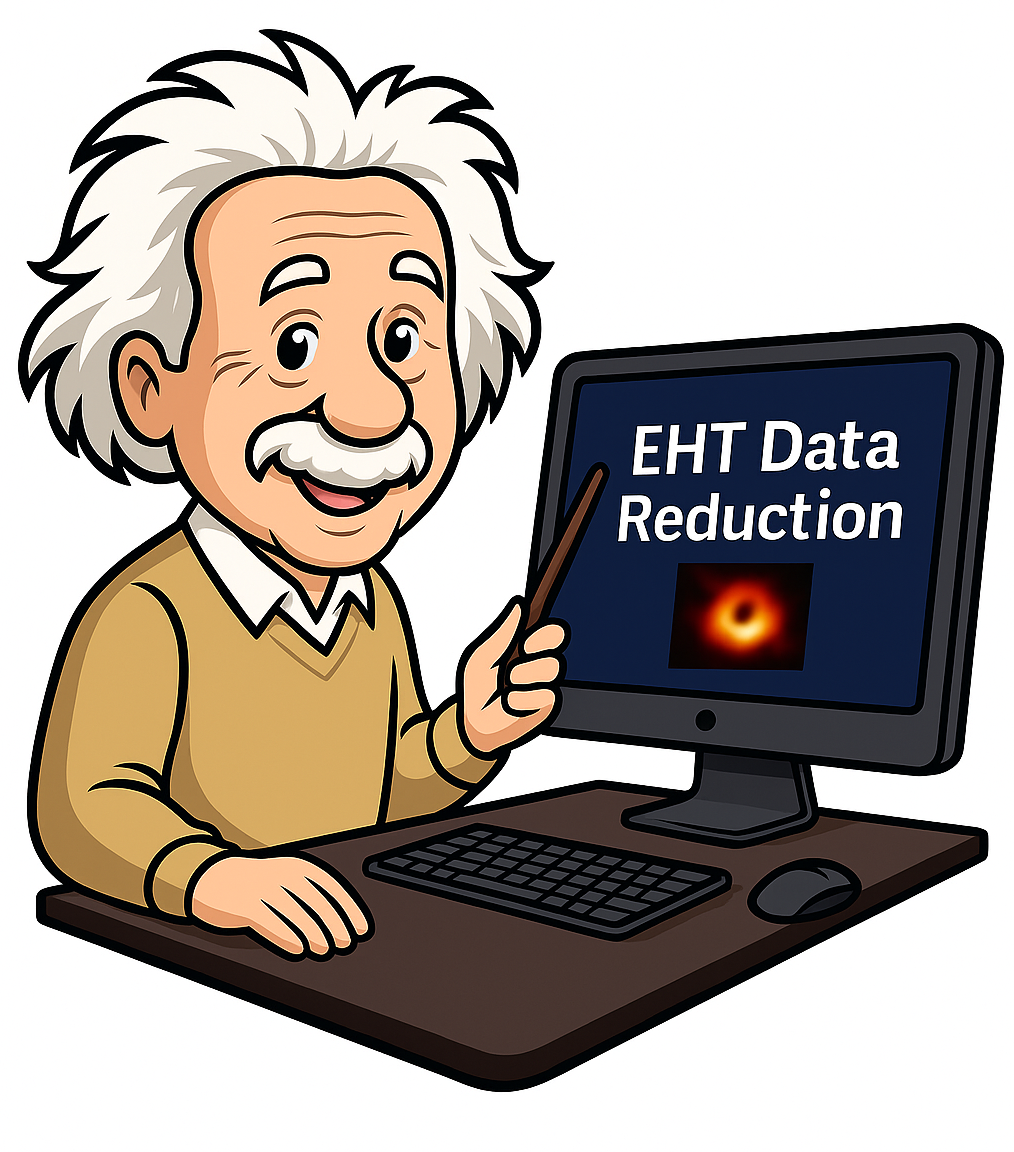
To make learning even more engaging, we provide both clear textual explanations and video tutorials — featuring a cartoon Einstein as your guide through the EHT data processing ! Follow the guides below to learn how to reduce and analyze EHT data using either HOPS or CASA/rPICARD.

Hi, I'm ChatEHT — your assistant for EHT data and calibration questions.
I’m here to help the C&E Working Group by answering common questions about
EHT datasets, calibration, and known issues.
ChatEHT will be developed in three stages, utilizing a local large language model provided by Hugging Face
, an AI company specializing in open-source machine learning models and tools. The current model in use
is Nous Hermes 2 – Mistral 7B – DPO:
https://huggingface.co/NousResearch/Nous-Hermes-2-Mistral-7B-DPO.
For questions about EHT data or calibration, please contact: